
What Makes a Great Italian Restaurant Review: A Diner's Guide to Evaluating Authenticity in Sydney

Da Mario in Rosebery — authentic Italian dining minutes south of Surry Hills
A useful italian restaurant review is not a star count or a stack of dimly lit phone photos. It is a careful reading of small signals, the kind that separate a kitchen with roots from one wearing the costume. Whether you are a Sydney local hunting for your next pasta night, a couple planning an anniversary, or an event organiser scouting the right private dining space, knowing what genuinely matters changes how you choose. This guide walks through the criteria experienced reviewers weigh, and uses Da Mario in Rosebery as a working example of what those criteria look like on the plate, in the glass, and at the table.
What an Italian Restaurant Review Actually Measures
A thoughtful italian restaurant review evaluates four pillars: ingredient sourcing, technical execution, atmosphere, and hospitality. Everything else is decoration. When all four hold together, the meal works. When even one collapses, no amount of soft lighting or hand-painted ceramics will save it.
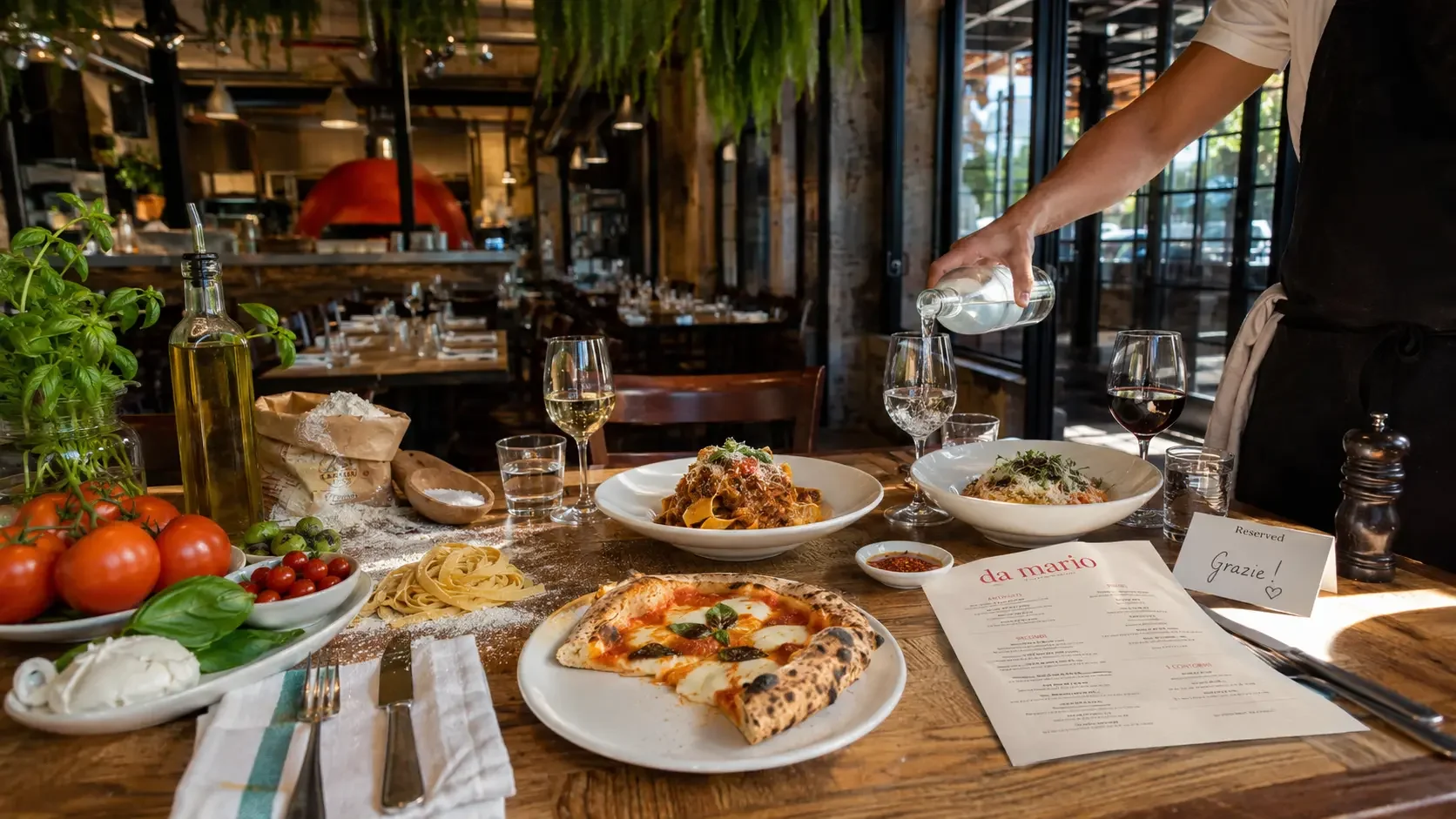
The strongest Italian restaurant reviews look beyond flavour and judge the full dining experience.
Most diners notice the dish but miss the kitchen behind it. The reviewer's craft is reading backward from the plate to the choices that produced it — the flour the chef ordered, the temperature of the oven, the grape on the wine list, the pace of the service.
The First Test: Does the Menu Tell a Regional Story?
In Italy, cuisine is regional before it is national. A trustworthy italian restaurant review starts with the menu: how long is it, what does it cover, and which Italy is it speaking from? Phonebook menus that promise everything from sushi to nachos rarely deliver on any of it. A short, considered menu suggests the kitchen has chosen what it wants to do well.
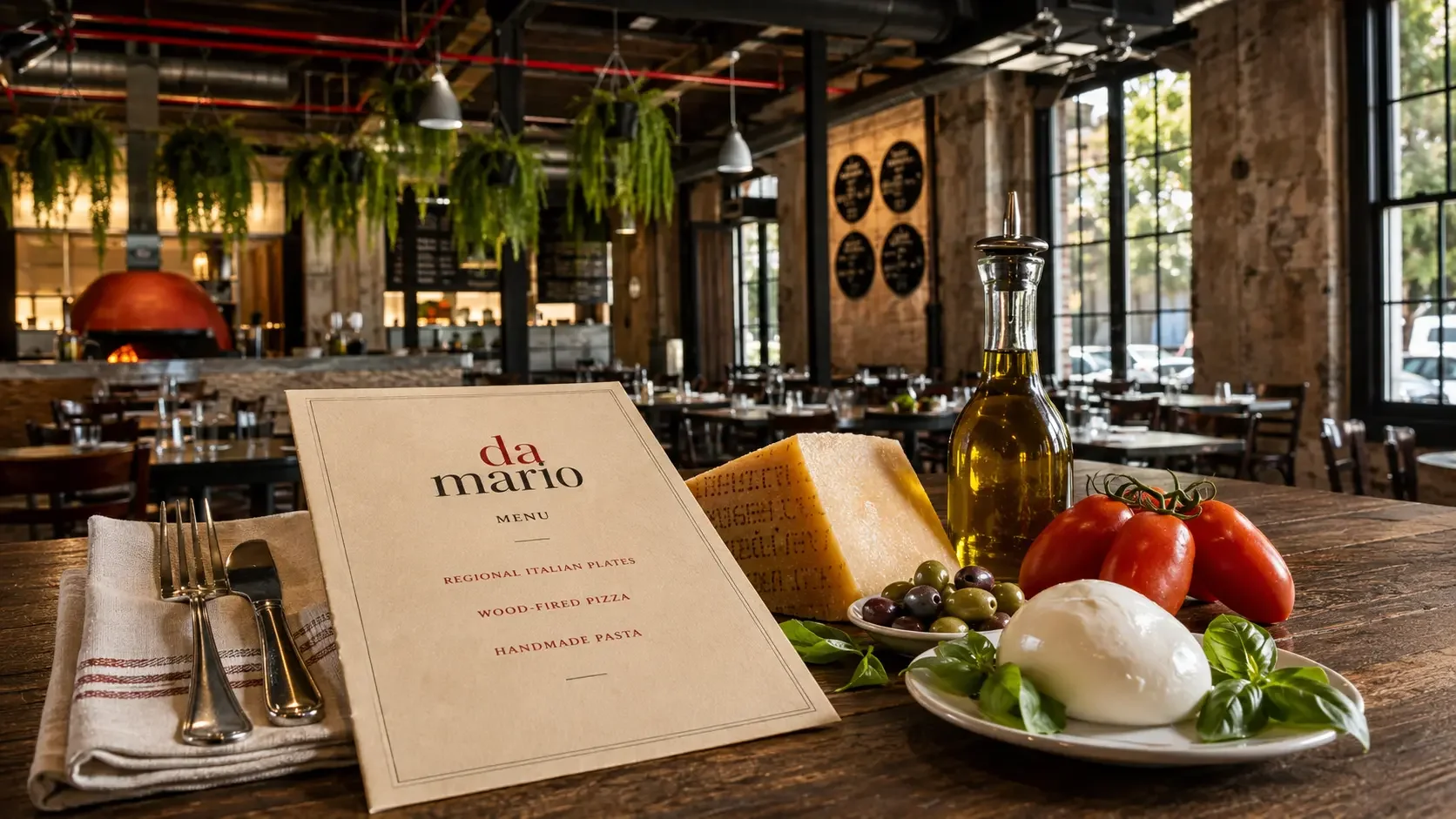
A short, focused menu often tells you more than a long list of generic Italian dishes.
Look for protected ingredients — DOP buffalo mozzarella, Parmigiano Reggiano, San Marzano tomatoes — and for dishes named in their proper Italian rather than translated into invented "Italian-style" language. The presence of regional specialties, whether a Sicilian pasta alla Norma, a Roman cacio e pepe, or an Emilian ragù, signals a kitchen working from real traditions rather than a generic Mediterranean blur.
At Da Mario, the menu is written this way on purpose. The kitchen leans on imported Italian staples, wood-fired pizza in the Neapolitan tradition, and pasta finished to order. Browsing the full set menus shows how regional structure translates into a course-by-course experience for celebrations and group dining.
Pasta Texture: The Most Honest Section of Any Italian Restaurant Review
If a restaurant claims to be Italian, the pasta will tell you whether the claim holds. This is the section of any italian restaurant review where the writing should slow down and pay attention.
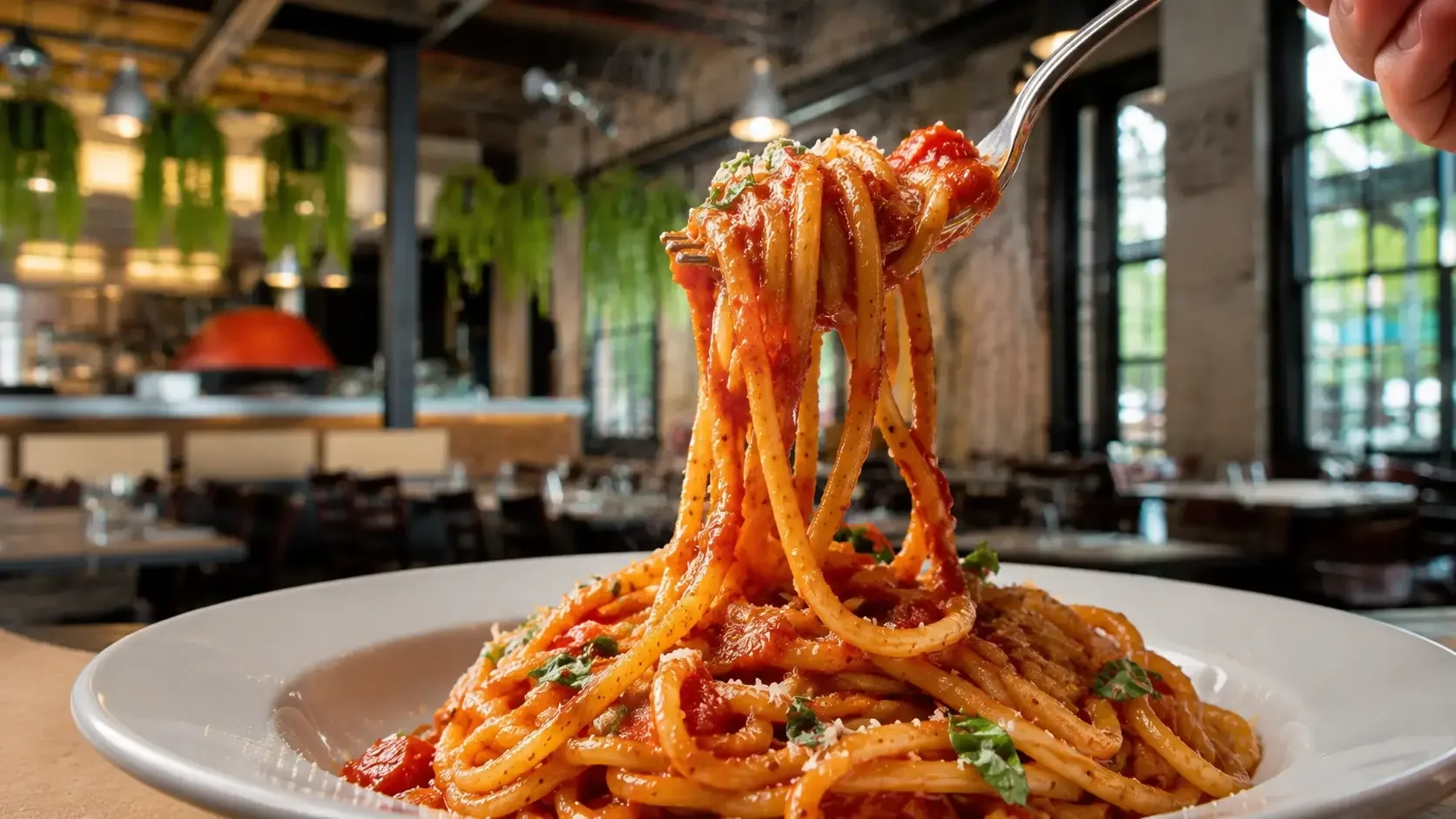
Pasta texture is one of the clearest signs of care in an Italian kitchen
Al dente is not a marketing word. It means the pasta retains a thin, slightly firm core when bitten — cooked through but still resistant. According to Decanter's guide to Italian pasta and wine pairing (decanter.com), bronze-die extrusion and slow drying are central to high-quality dried pasta because they create a textured surface the sauce can cling to. Soft, slick, glossy pasta drowning in sauce is almost always a sign of overcooked product or smooth-die industrial pasta with nothing for the sauce to grip.
A few markers a reviewer should test:
The bite. Pasta should require a small effort to chew, not collapse on the tongue.
The surface. Run a fork across the noodle. A faintly rough texture means the sauce has somewhere to go.
The marriage. Sauce and pasta should taste like one dish, not two layered ingredients sitting on top of each other.
The portion. A generous bowl of overcooked pasta is not a virtue. A measured bowl, properly cooked, is.
Wine Pairing Reveals the Restaurant's Soul
A wine list is a values statement. A list dominated by the same three international labels you would find in any chain bistro tells you the restaurant is treating wine as inventory. A list that ventures into native Italian grapes — Vermentino, Falanghina, Nerello Mascalese, Sangiovese, Nebbiolo — tells you someone in the building cares.
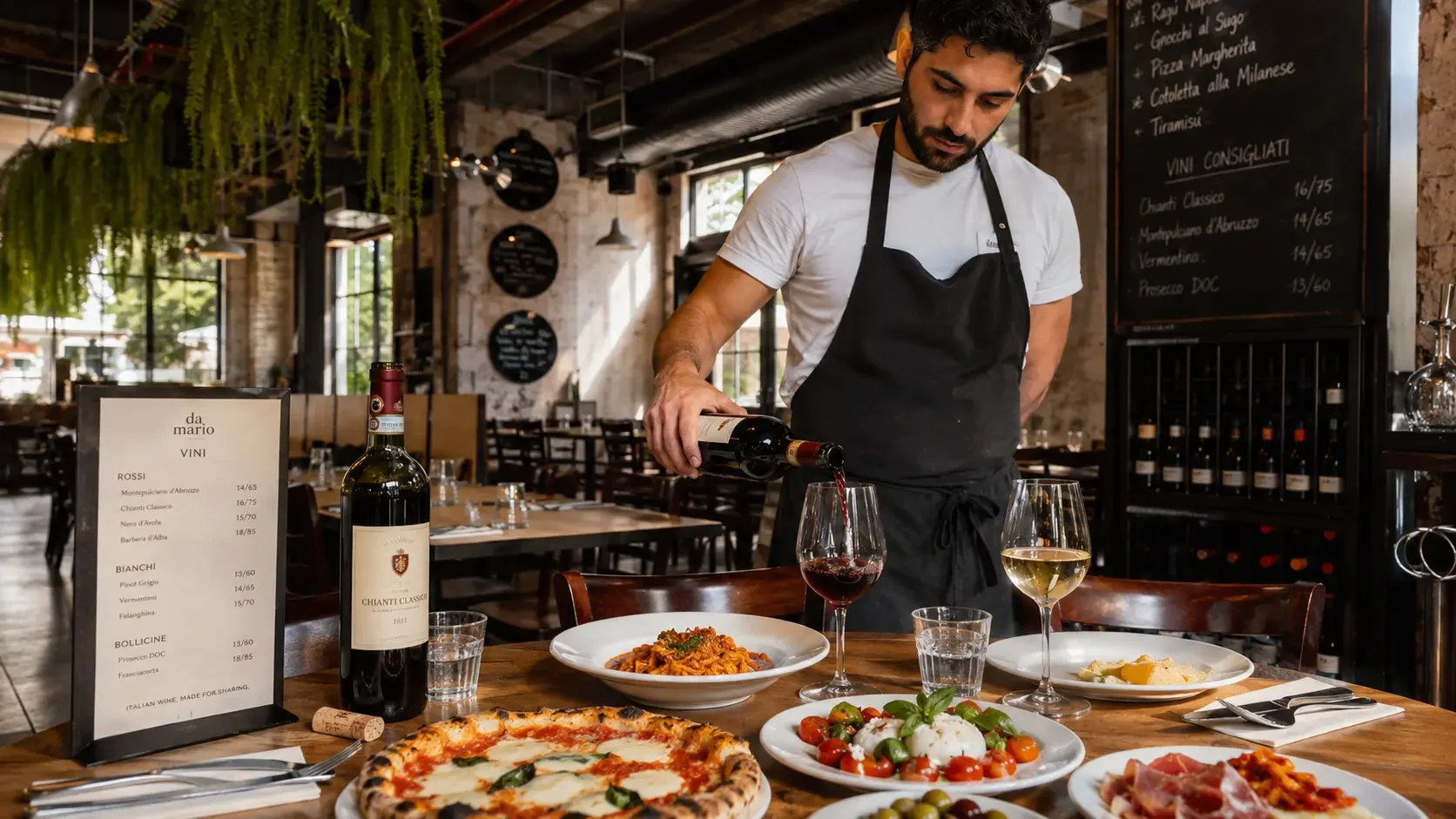
A thoughtful wine list reveals whether a restaurant treats wine as part of the meal or just inventory
Pasta and wine pairing follows the sauce, not the noodle. Tomato-based dishes pair with reds carrying acidity such as Chianti or Sangiovese. Cream and cheese sauces want crisp whites that cut through fat. Seafood pasta usually calls for a coastal white, and Vermentino is the classic answer. A good italian restaurant review will note whether the staff can guide a diner through these choices or whether the wine list is simply handed across without context.
Da Mario's drink list reflects this regional thinking, with bottles selected to sit alongside the food rather than overpower it. Ask for a recommendation when you visit — you will learn quickly whether a restaurant trains its floor staff or treats wine as an afterthought.
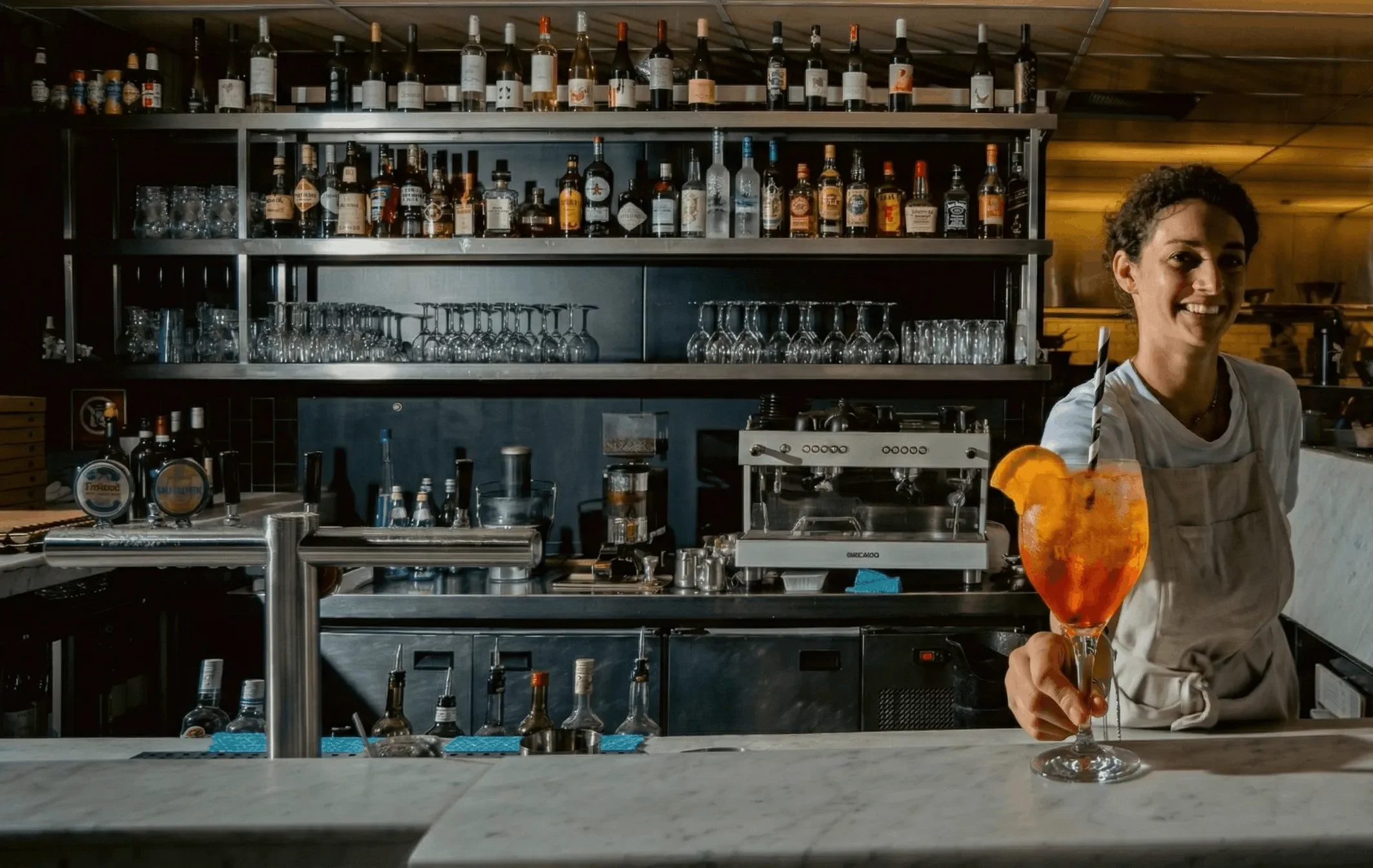
A drink list built for Italian food — aperitivo classics, Italian wine and Australian producers
Atmosphere, Service, and the Italian Concept of Accoglienza
Italians have a word for hospitality that goes beyond efficient service: accoglienza, the warmth of welcoming. It is the feeling of being received rather than processed. The rhythm of a real Italian restaurant runs on regulars — tables held without being asked for, waiters who know what people order, conversations that have run for years. That rhythm is impossible to fake.
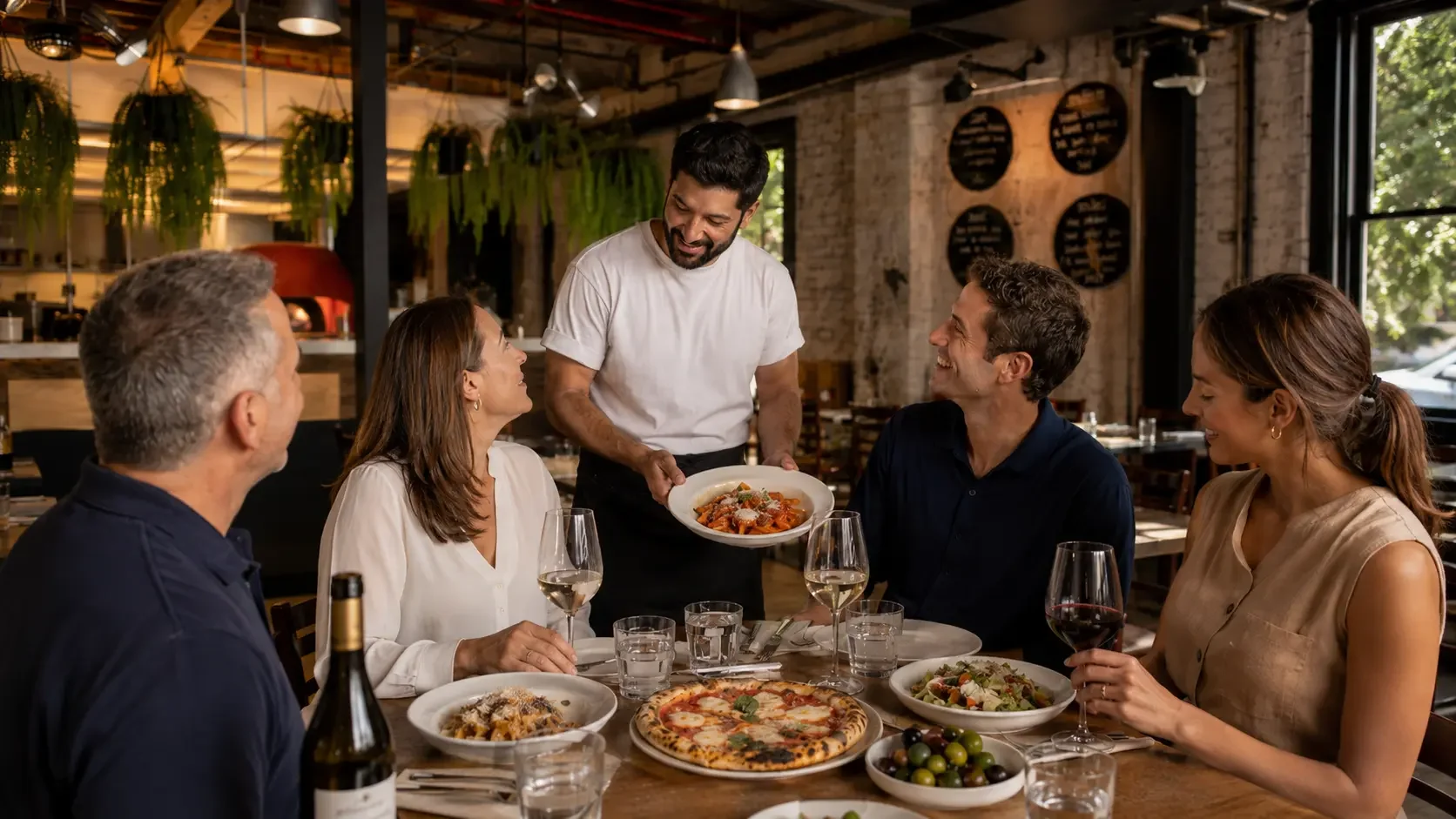
Real Italian hospitality feels like being welcomed, not processed.
What to weigh in a restaurant review under this category:
Pacing. Are courses brought when you are ready, not when the kitchen is clearing them? Italian meals breathe.
Attentiveness without hovering. The right server is present when needed and invisible when not.
Knowledge. Can the staff explain a dish, recommend a pairing, describe where the burrata is from?
Comfort. Are tables spaced so a conversation feels private?
Atmosphere should match the food. A wood-fired pizzeria with stiff white tablecloths feels confused. A trattoria under sterile lighting feels embalmed. The room should support the meal.
The Sydney Context: What an Italian Restaurant Review Should Cover Locally
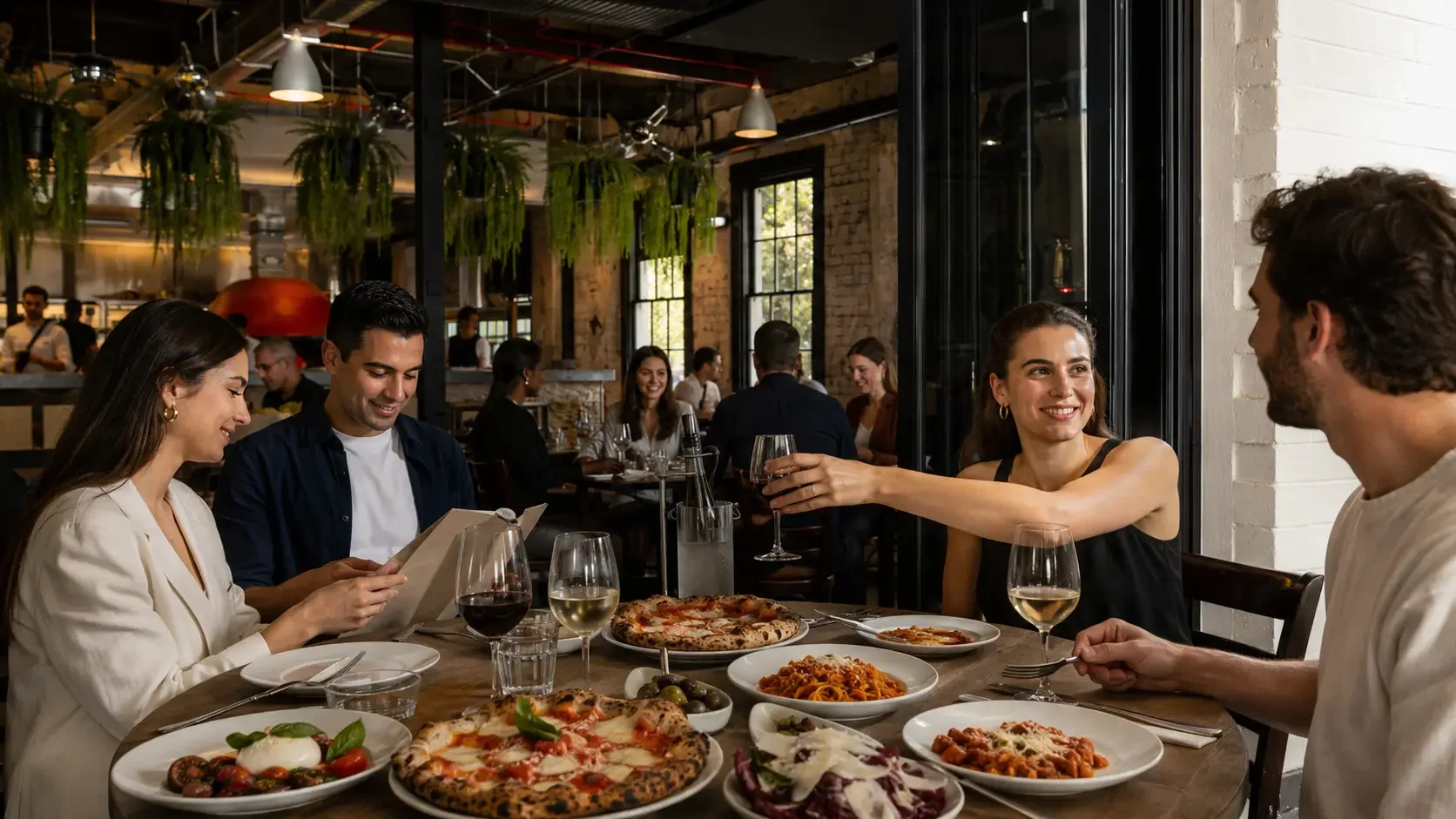
For Sydney diners, location, access, and occasion suitability matter as much as the food
A restaurant review written for Sydney readers needs to address the practical questions Sydney diners actually ask. Where is it? Can I get there easily? Is it suited to a celebration?
Da Mario sits at Shop 1/36 Morley Avenue in Rosebery, a short drive from the CBD and within easy reach of the Eastern Suburbs and inner Sydney. On-street parking is generally available in the surrounding streets, and the location is well served by buses connecting Rosebery to Green Square station, making it accessible by public transport. Searches for an italian restaurant near me from Rosebery, Mascot, Alexandria, and Waterloo regularly bring diners here.
A complete italian restaurant review should also note recent updates — seasonal menu refreshes, new pizza specials, additions to the drink list. Da Mario updates these regularly, which is part of why repeat diners keep returning rather than treating the visit as a one-off.
Frequently Asked Questions About Da Mario Italian Restaurant Sydney
1. What should I look for in an Italian restaurant review?
Focus on four areas: ingredient sourcing (DOP labels, imported staples), pasta texture (al dente, handmade or quality bronze-die dried), wine list depth (regional Italian grapes), and service quality (pacing, knowledge, warmth). A review that covers only the food is missing half the story.
2. How can I tell if an Italian restaurant is authentic from a review?
Look for specific details. Mentions of San Marzano tomatoes, wood-fired ovens, regional dishes by their proper names, and an Italian-led wine list usually indicate authenticity. Generic praise like "delicious pasta" without context is a weak signal.
3. Is Da Mario suitable for special occasion dining in Sydney?
Yes. Da Mario hosts bridal showers, milestone birthdays, anniversaries, and corporate events across its dining room, terrace, and full venue exclusive options. Set menus and dedicated event coordination simplify planning.
4. How do I book a group dinner at Da Mario?
Groups of up to 24 can book online directly. Parties of 25 or more are handled through an enquiry on the contact page so the team can confirm the right space, set menu, and any venue hire arrangements.
5. What is the best wine to pair with Italian pasta?
Match the wine to the sauce. Tomato-based pasta pairs well with Sangiovese or Chianti. Cream and cheese sauces work with crisp whites such as Vermentino or Verdicchio. Seafood pasta usually calls for a coastal Italian white. Ask the floor staff for a regional recommendation.
6. Where is Da Mario located in Sydney?
Da Mario is located at Shop 1/36 Morley Avenue, Rosebery, Sydney. The restaurant is accessible by car and bus, a short ride from Green Square station, with on-street parking nearby.
7. Why does pasta texture matter so much in a restaurant review?
Pasta texture is the clearest test of a kitchen's care. Al dente pasta with a slightly rough surface holds sauce properly and tastes like one cohesive dish. Soft, sticky, or glossy pasta usually points to either overcooking or low-quality industrial product.
Plan Your Visit to Da Mario
A great italian restaurant review should leave you with one practical outcome — a reservation. If this guide has helped you understand what to look for, the simplest next step is to experience it on the plate. Book a table at Da Mario for dinner, browse the set menus for a celebration, or get in touch to discuss a private event. Sydney has a deep dining scene; choose carefully, and let the meal speak for itself.
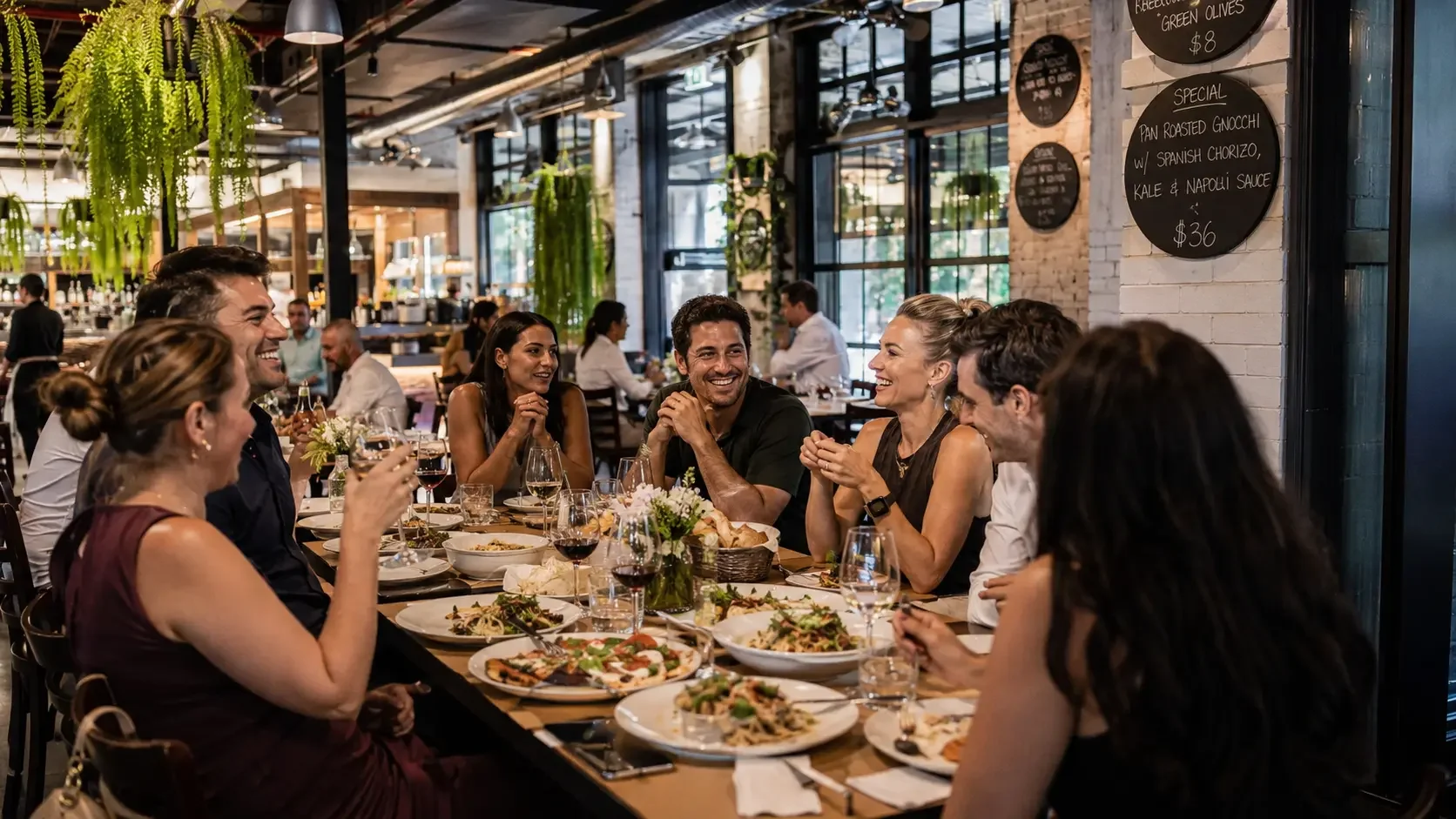
From intimate dinners to larger celebrations, the right Italian restaurant should make the table feel alive
